Replacing Halogen Bulbs with LED: What Works for Lamps, Exam Lights and Surgical Lights
Can you replace halogen bulbs with LED? Halogen bulb types, halogen light colour, LED replacement bulbs, and the safe way to convert a halogen operating lamp or examination light to LED.

Halogen lighting is being phased out in many markets, and LED is cheaper to run almost everywhere. The question "can you replace halogen bulbs with LED?" has a simple answer at home and a more careful one in the hospital. This guide covers both — and the right way to convert a halogen operating lamp.
Short answer: at home or in the office, yes — match the base, size and driver. In a surgical or examination light, use the manufacturer's LED version, not a generic retrofit bulb.
What is a halogen light?
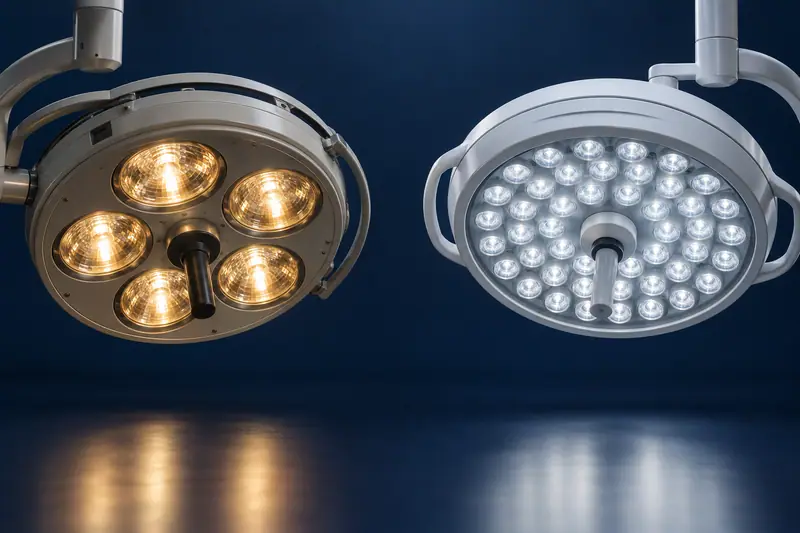
A halogen bulb is an incandescent lamp: a tungsten filament heated until it glows, sealed in a quartz capsule with halogen gas. The halogen cycle keeps the glass clean and the filament from thinning too fast, so halogen lamps are brighter, whiter and longer-lived than ordinary incandescent bulbs — but still hot and power-hungry.
Halogen light colour
Halogen light is warm white, about 2,800–3,200 K, with near-perfect colour rendering. Medical halogen lamps add filters to reach about 4,500 K — see what CCT means.
Common halogen bulb types
| Type | Base | Typical use |
|---|---|---|
| GU10 | Twist-lock, mains voltage | Spotlights, downlights |
| MR16 / GU5.3 | Two pins, 12 V | Downlights, display lights |
| G4 | Small 2-pin, 12 V | Capsule bulbs, cabinet lights |
| G9 | Looped pins, mains | Small decorative fittings |
| R7s | Double-ended linear | Floodlights, uplighters |
| Medical 24 V capsule | Model specific | Surgical and examination lamps |
Replacing halogen bulbs with LED at home and in offices
- Match the base and physical size; LED replacements are often longer.
- Check voltage — 12 V MR16 and G4 fittings use a transformer; some older electronic transformers need a minimum load and flicker with LEDs.
- Check dimmers — use dimmable LEDs and an LED-compatible dimmer.
- Match brightness by lumens, not watts.
- Pick colour and CRI — 2,700–3,000 K to match halogen warmth; CRI ≥ 90 for good colour.
- Mind the beam angle for spotlights.
For a step-by-step on removing the old bulb, see how to change a halogen bulb.
Why surgical lights are different
A halogen operating lamp is a certified medical device. Its multi-reflector optics are calculated for a specific filament size and position. A generic LED retrofit bulb:
- changes the light field, illuminance and depth — often dramatically;
- may overheat in a housing not designed for LED electronics;
- may flicker or fail with the lamp's power supply;
- voids the device's compliance with IEC 60601-2-41 and the manufacturer's warranty.
The right way: halogen-to-LED conversion by model
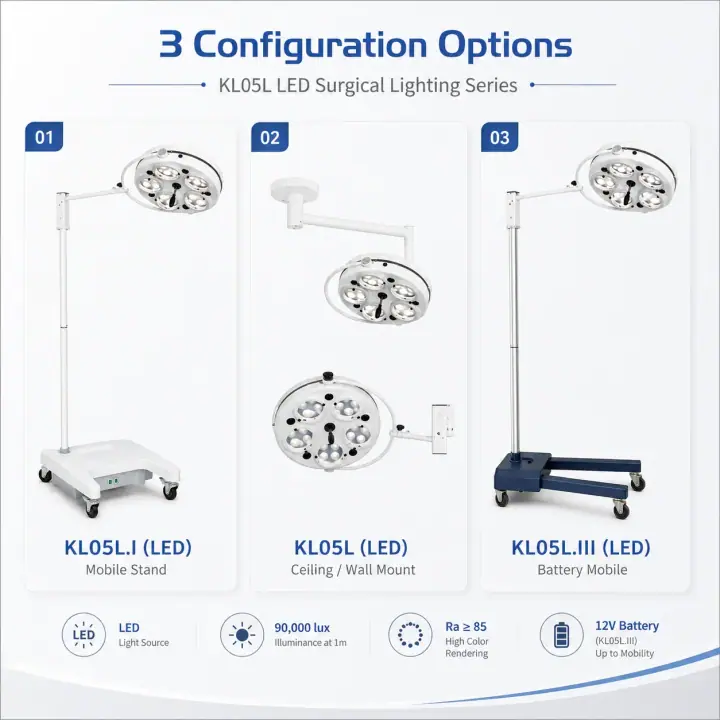
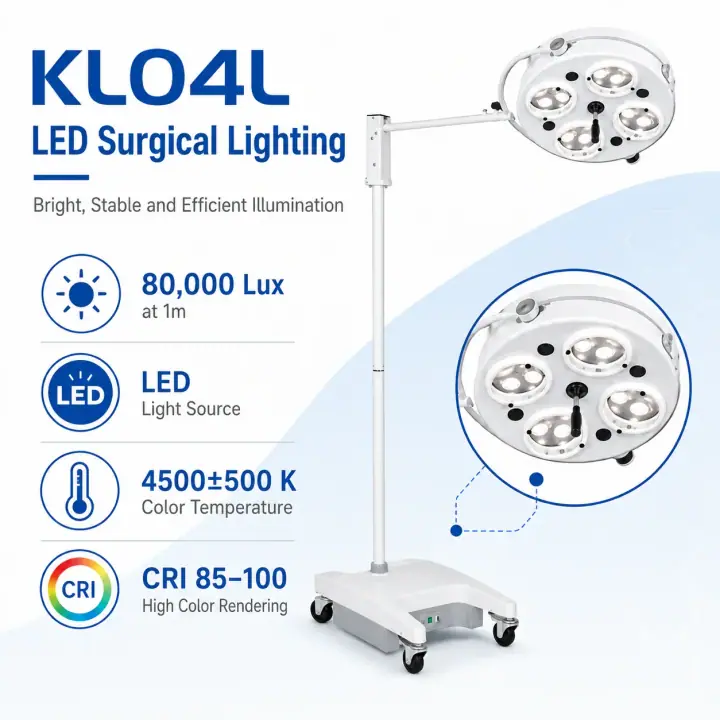
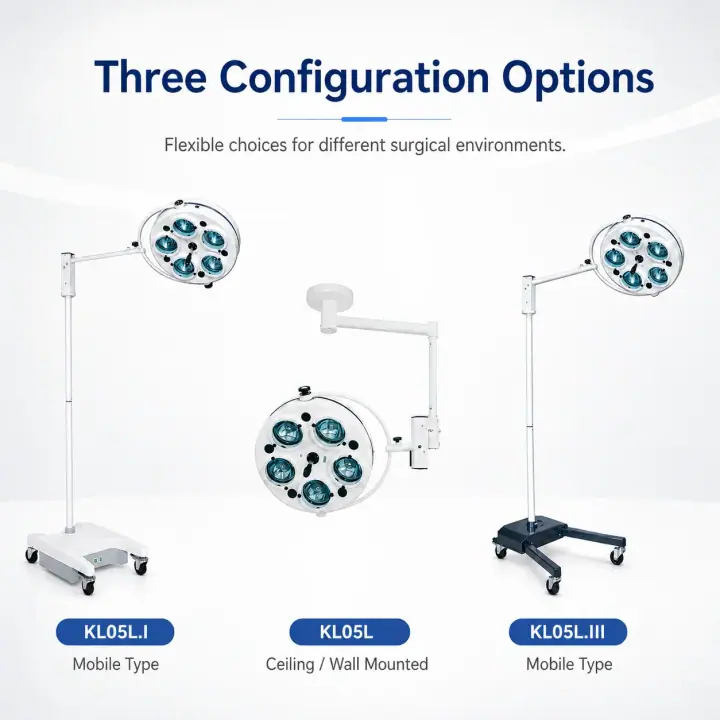
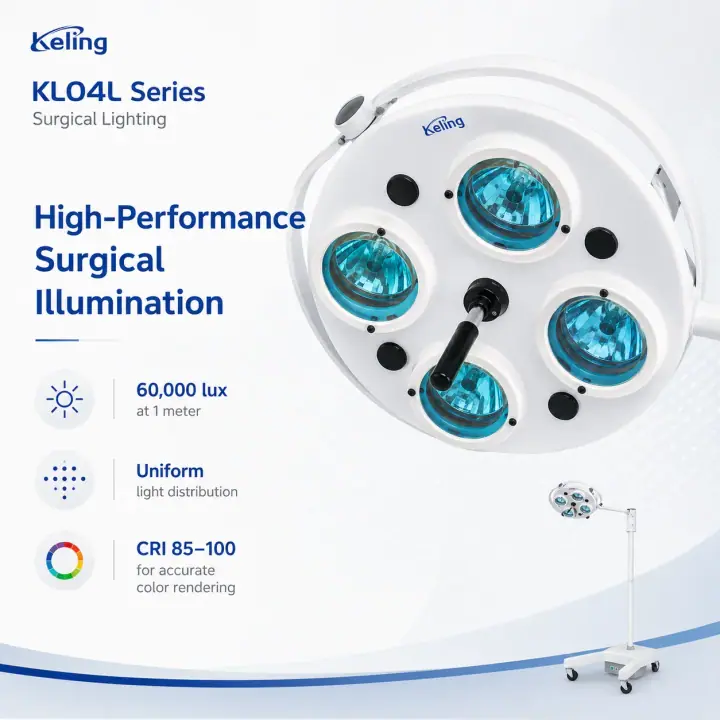
Keling offers LED versions of its multi-reflector lamps that keep the familiar hole-type head:
| Halogen model | LED version | Illuminance at 1 m | Input power |
|---|---|---|---|
| KL04L (five-hole, 24 V 100 W bulbs) | KL04L-LED | 60,000 → 80,000 lux | See datasheet |
| KL05L (six-hole, 24 V 125 W bulbs) | KL05L-LED | 80,000 → 90,000 lux | 150 VA → 36 VA |
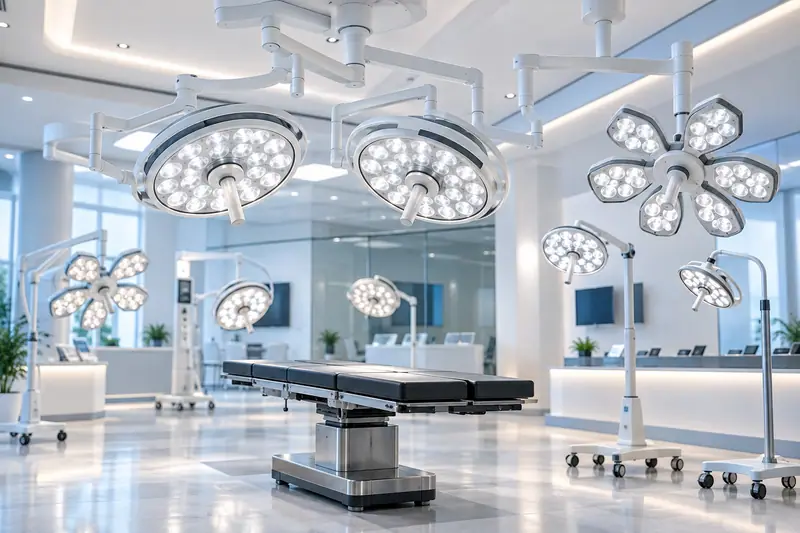
For a new theatre, a full LED dome such as the KL-LED-STZ5 (160,000 lux) is often the better investment. The economics are in LED vs halogen surgical lights.
Benefits of converting to LED
- Energy: the KL05L-LED draws 36 VA vs 150 VA for the halogen KL05L.
- Heat: less radiant heat at the wound and in the room.
- Lifetime: around 50,000 h for Keling LED lights vs roughly 1,000–2,000 h for a halogen bulb.
- Maintenance: far fewer bulb changes and spare-part orders.
When halogen still makes sense
- Facilities with large stocks of bulbs and halogen lamps in good condition.
- Very tight capital budgets.
- Where local technicians can only service simple bulb lamps.
Ask us for an upgrade plan for your existing halogen operating lamps.
Frequently asked questions
Can you replace halogen bulbs with LED?
In most household and commercial fittings, yes — choose an LED bulb with the same base (e.g. GU10, MR16/GU5.3, G4, G9, R7s), a similar size and a compatible driver or transformer. In medical surgical lights, only use the manufacturer's approved LED version, because the optics, heat and electrical design are part of the device's certification.
What is a halogen light?
A halogen light is an incandescent lamp in which a tungsten filament sits in a small quartz capsule filled with a halogen gas. The halogen cycle redeposits evaporated tungsten on the filament, so the bulb is brighter and lasts longer than a standard incandescent bulb.
What colour is halogen light?
Halogen bulbs produce warm white light, typically around 2,800–3,200 K, with excellent colour rendering (CRI close to 100). Medical halogen lamps use filters to raise the colour temperature to around 4,500 K.
Are LED replacements for halogen bulbs worth it?
Usually. LEDs use a fraction of the energy, produce far less heat and last many times longer. Check dimmer and transformer compatibility, beam angle and CRI before switching.
Can I put an LED bulb in my halogen surgical light?
Not with a generic retrofit bulb. A surgical light's reflectors are designed for a specific filament position and output; a generic LED changes the light field, illuminance and heat and voids compliance. Use the manufacturer's LED version — for example the Keling KL04L-LED or KL05L-LED.
Is halogen light incandescent?
Yes. A halogen lamp is a type of incandescent lamp; it makes light by heating a tungsten filament.