Ceiling Mounted Surgical Light Installation: Planning, Ceiling Height and Commissioning
How to plan and install a ceiling mounted surgical light: ceiling height, structural support, anchor plates, power, single vs dual heads, commissioning and acceptance tests.

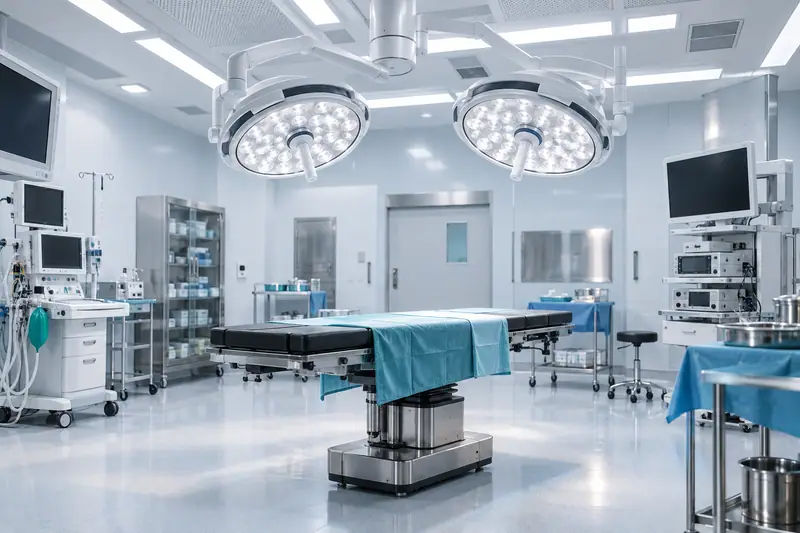
A ceiling mounted surgical light is the centrepiece of an operating room — and the item most often delayed by poor site preparation. The light itself installs quickly; the structure, power and ceiling coordination take planning. This guide covers what architects, contractors and biomedical engineers need to prepare for overhead surgical lights.
Rule of thumb: fix the light to the building structure, not to the false ceiling; confirm the finished ceiling height (270–320 cm for Keling ceiling LED models); and get the anchor-plate drawing to the contractor before the ceiling closes.
1. Choose the configuration first
| Configuration | Typical room |
|---|---|
| Single head | Procedure room, day surgery |
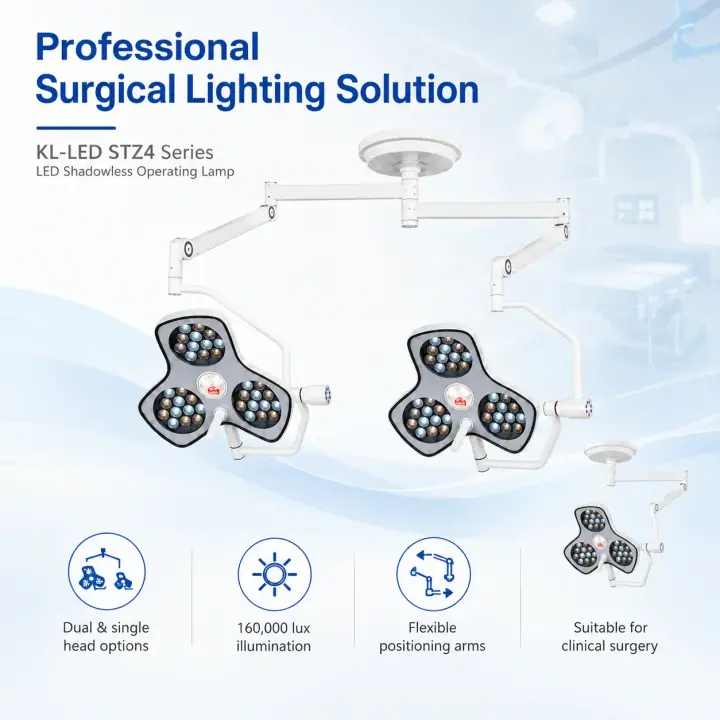
| Dual head (main + satellite) | General and major OR |
| Dual head + monitor arm | Laparoscopy, teaching |
| Dual head with camera | Teaching, telemedicine, hybrid OR |
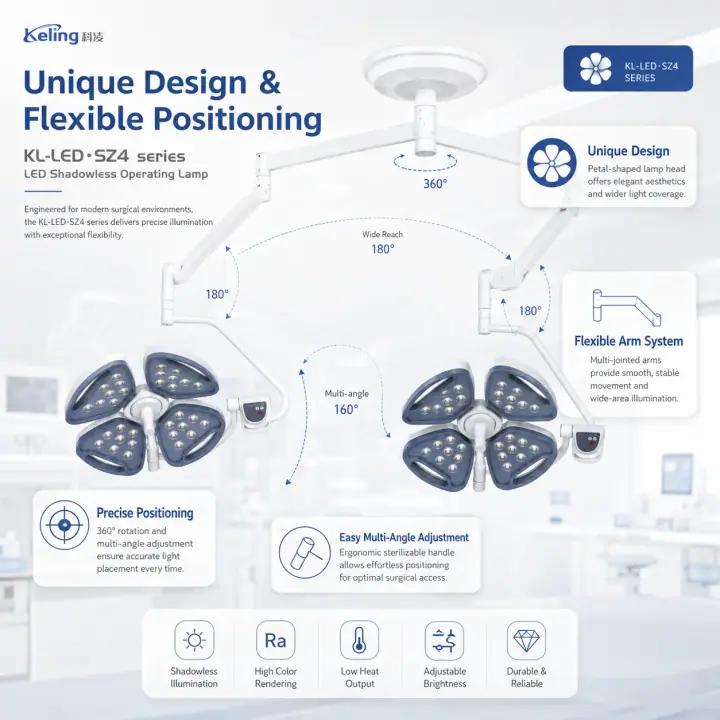
Example models: KL-LED-STZ4 (single or dual four-petal dome), KL-LED-DT6I (double dome), KL-LED-STZ5 camera system.
The configuration determines the load, the moment on the anchor and the number of cables — so settle it before the structural design.
2. Ceiling height and suspension tube
- Measure the finished floor to finished ceiling height in each room.
- Keling ceiling LED lights are specified for 270–320 cm.
- The suspension tube length is chosen so the arms clear the surgical team and the lamp head reaches the working distance (70–140 cm above the field).
- Note ceiling-mounted items nearby — pendants, laminar-flow canopy, rails — that could collide with arm rotation.
3. Structural support
- The central axis is bolted to an anchor plate fixed to the concrete slab or to a steel sub-frame between beams.
- The structure must resist the weight and the bending moment of fully extended arms. Obtain the figures from the manufacturer's installation drawing and have a structural engineer approve the fixing.
- Keep the anchor plate level; an uneven plate makes the arms drift.
- Coordinate with the laminar-flow ceiling, which often sits exactly where the light goes.
4. Electrical and data
- A dedicated supply to the ceiling point (Keling LED lights accept 100/110–240 V, 50/60 Hz — check each model).
- Connection to the hospital's back-up power or UPS so the light stays on during a mains failure.
- Wall control panel cable, if specified.
- For camera models: video cabling (e.g. 3G-SDI) to the recording system or monitors.
5. Installation sequence
- Anchor plate installed and inspected before the false ceiling is closed.
- Ceiling finished with an opening for the central axis and a decorative cover.
- Central axis and suspension tube mounted and levelled.
- Arms and spring arms fitted, then lamp heads.
- Cabling connected; covers installed.
- Arm brakes and balance adjusted so heads stay where placed.
6. Commissioning and acceptance
- Check every function: on/off, intensity steps, CCT, field size, endo mode.
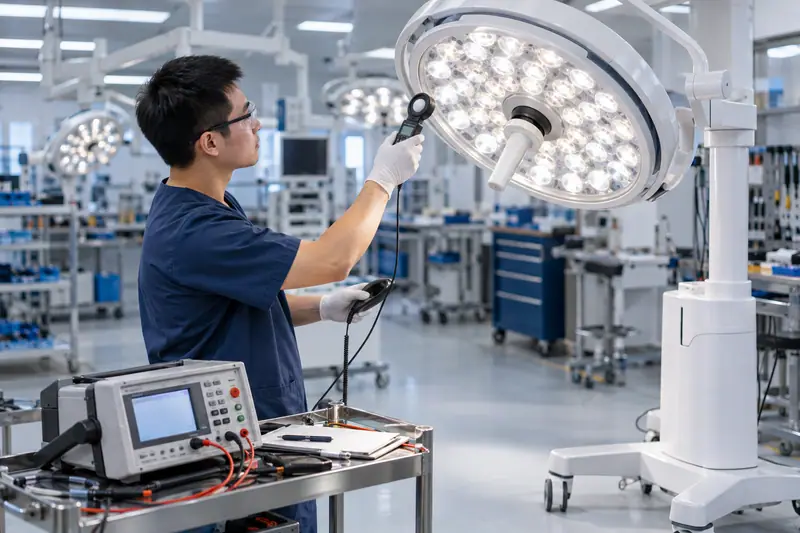
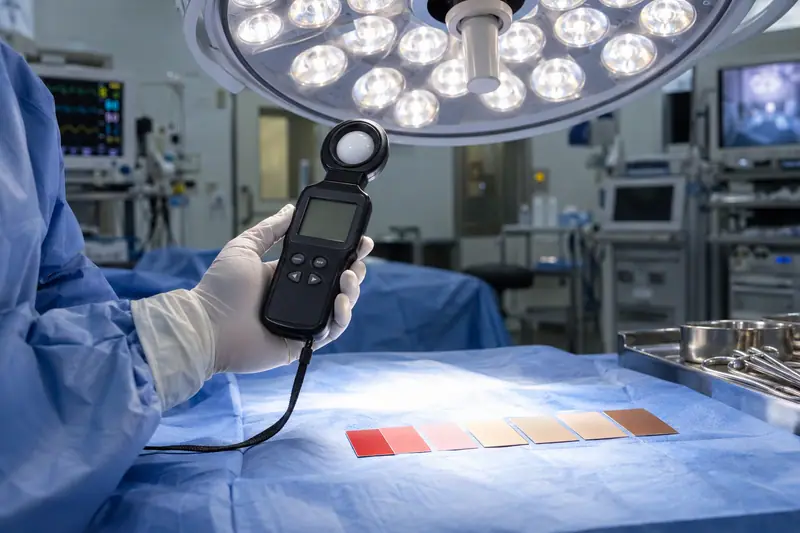
- Measure central illuminance at 1 m with a calibrated lux meter — method in how to use a lux meter.
- Verify arm movement range and that no position collides with other equipment.
- Test switchover to back-up power.
- Train the theatre team on handles, cleaning and daily checks.
- Record serial numbers and hand over manuals and the maintenance plan — see surgical light maintenance.
Ceiling or mobile?
If the structure cannot be reinforced, the room is temporary, or the budget is tight, a mobile light may be better. Compare in ceiling vs mobile surgical lights, or browse ceiling LED surgical lights.
What Keling provides
- Installation drawings and anchor-plate details for each model.
- Installation manual and remote technical support for distributor engineers.
- Spare parts list and recommended stock for the project.
Send us your room heights and configuration and we'll return drawings with the quotation.
Frequently asked questions
What ceiling height is needed for a ceiling mounted surgical light?
It depends on the model and suspension tube. Keling ceiling LED surgical lights are specified for finished ceiling heights of 270–320 cm. Other heights can often be handled with a different suspension tube length — confirm with the manufacturer before ordering.
Does the ceiling need reinforcement for a surgical light?
Usually yes. The light is fixed to the building structure (concrete slab or steel beam) via an anchor plate or a steel sub-frame — never to the suspended ceiling. A structural engineer should confirm the load and moment capacity.
How long does it take to install an overhead surgical light?
Once the anchor plate and power are ready, mechanical assembly and commissioning of a ceiling surgical light are usually a matter of a day or so per room for a trained technician, depending on configuration — the structural and ceiling work beforehand takes far longer.
Can a ceiling surgical light be installed in an existing operating room?
Yes, if the structure above the ceiling can be accessed and reinforced. Where this is impossible or the room must stay in use, a mobile surgical light is a practical alternative.
Who installs Keling ceiling surgical lights abroad?
Usually the local distributor's engineers, using Keling's installation drawings, manuals and remote technical support. Keling can train distributor engineers and provide anchor-plate drawings in advance.