Hospital Lighting Guide: Medical Lighting Room by Room
Hospital lighting and medical lighting explained room by room — operating rooms, ICU, wards, examination rooms, corridors — with typical lux levels, CCT, CRI, LED fixtures, bed lights and design tips.

Good hospital lighting helps staff work accurately, helps patients rest and recover, and keeps energy bills under control. Medical lighting spans everything from 160,000-lux surgical lights to 5-lux night lights. This guide goes room by room.
Principle: layer general lighting, task lighting and night lighting — and pick fixtures that can be cleaned and that render colour well.
Layers of hospital lighting
| Layer | Examples |
|---|---|
| General (ambient) | LED ceiling panels, downlights, sealed cleanroom fixtures |
| Task | Surgical lights, examination lights, bed-head reading lights, desk lights |
| Night / orientation | Low-level corridor and bathroom lights, bed under-lights |
| Emergency | Escape route and standby lighting |
| Accent / wayfinding | Signs, reception features |
Typical illuminance by area
| Area | Typical general lighting* | Task / notes |
|---|---|---|
| Corridors (day) | ~100–200 lux | Lower at night |
| Wards, general | ~100 lux | Reading light ~300 lux at bed |
| Bedside examination | — | ~1,000 lux task light |
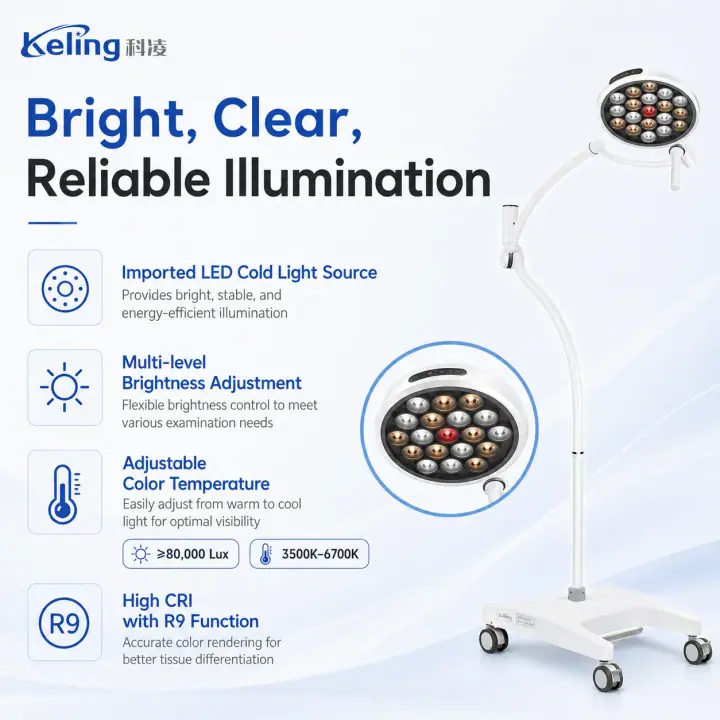
| Examination / treatment room | ~500 lux | Exam light 20,000–80,000 lux — see examination lights |
| ICU | ~100 lux general | Examination lighting at bed |
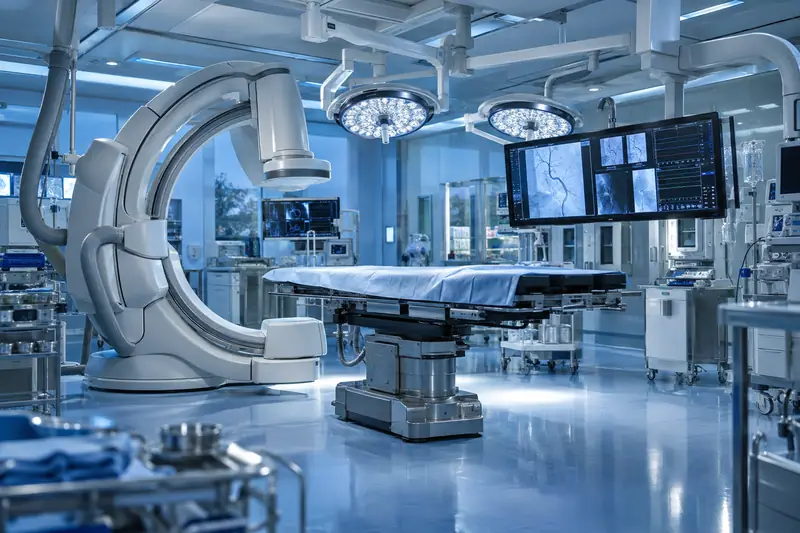
| Operating room | ~1,000 lux or more | Surgical light 40,000–160,000 lux — see lux requirements |
| Pharmacy, laboratory | ~500 lux | High CRI |
| Offices, nurse stations | ~300–500 lux | Glare control |
*Commonly cited orders of magnitude; follow the applicable standard (e.g. EN 12464-1 in Europe, national hospital guidelines elsewhere).
Colour temperature and colour rendering
- Clinical areas: neutral to cool white (~4,000–5,000 K), CRI ≥ 80, higher (≥ 90) where skin tone is judged.
- Patient rooms: tunable or warmer light in the evening.
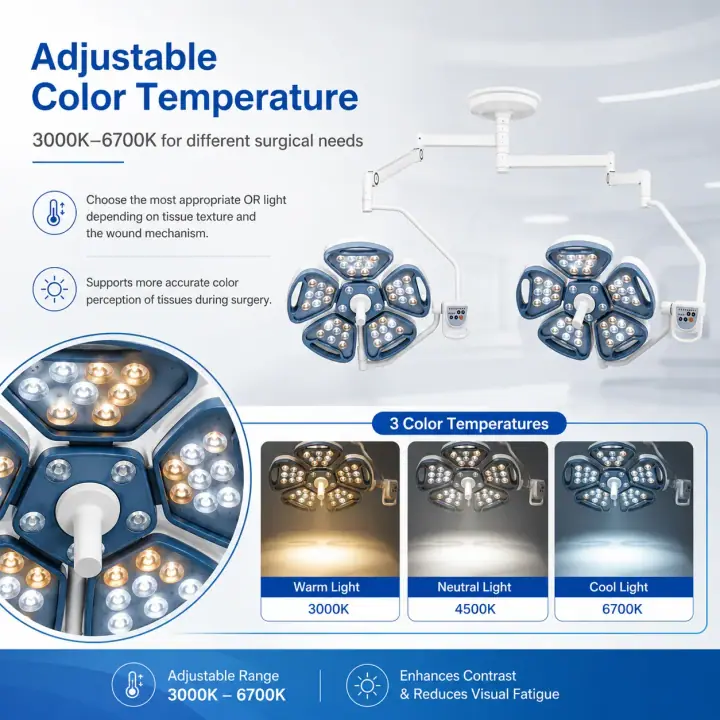
- Surgery: 3,000–6,700 K adjustable surgical lights with Ra ≥ 85 and high R9.
Background: what CCT means.
Hospital lighting fixtures
- Sealed LED panels (IP-rated) for clinical rooms and ORs — smooth, cleanable surfaces.
- Downlights for corridors and public areas.
- Bed-head units with reading, night and examination light.
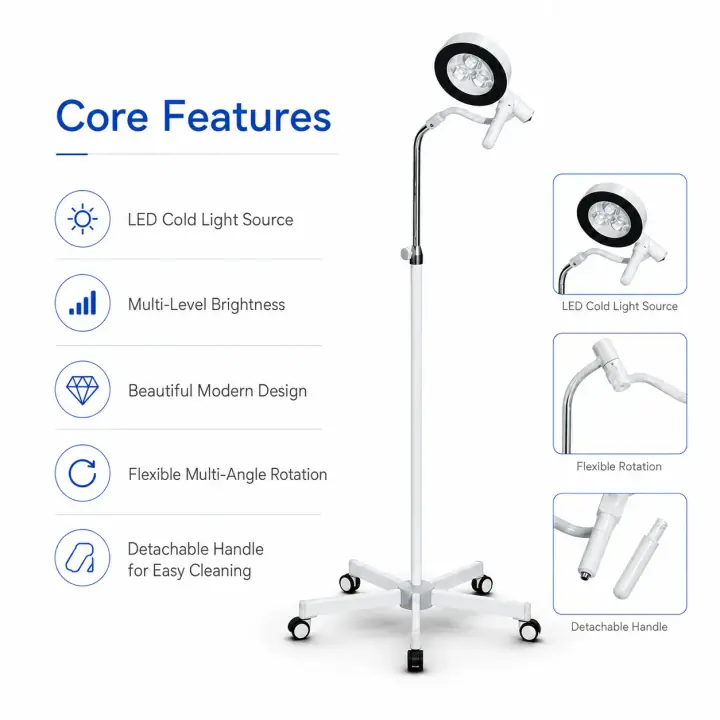
- Examination lights — mobile, wall or ceiling — such as the KL01L-IILEDTR or high-CRI KL01L-ILED-I.
- Surgical lights — e.g. the KL-LED-STZ5.
- "Drop lights" / pendant task lights in treatment bays.
Design tips
- Avoid glare for supine patients — they look straight at the ceiling.
- Provide individual control at the bed.
- Use daylight and circadian-friendly schedules where possible.
- Keep contrast moderate between task and surroundings, especially in the OR.
- Connect critical lighting to emergency power.
- Choose fixtures that tolerate hospital disinfectants.
- Plan maintenance access, especially in ORs and isolation rooms.
LED lighting for hospitals: the case
- Lower energy and cooling load.
- Long life — fewer interventions in clinical areas.
- Instant start, smooth dimming, tunable white.
- No mercury (unlike fluorescent).
Medical office and clinic lighting
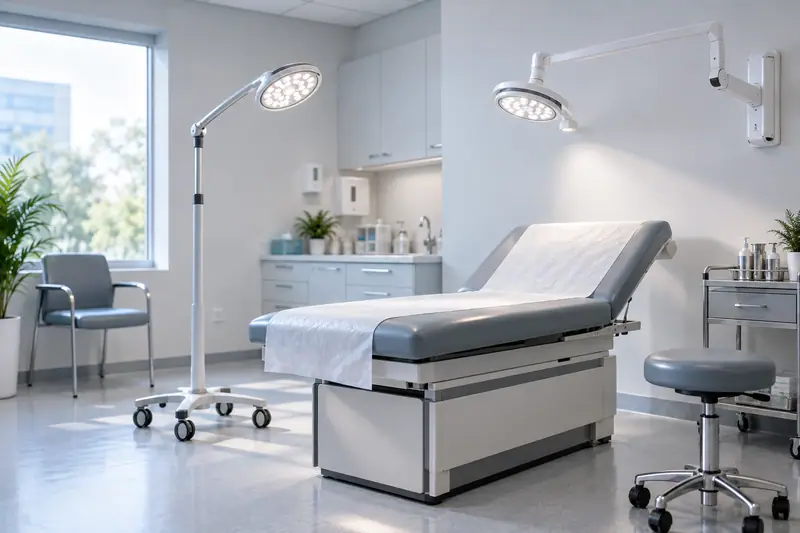
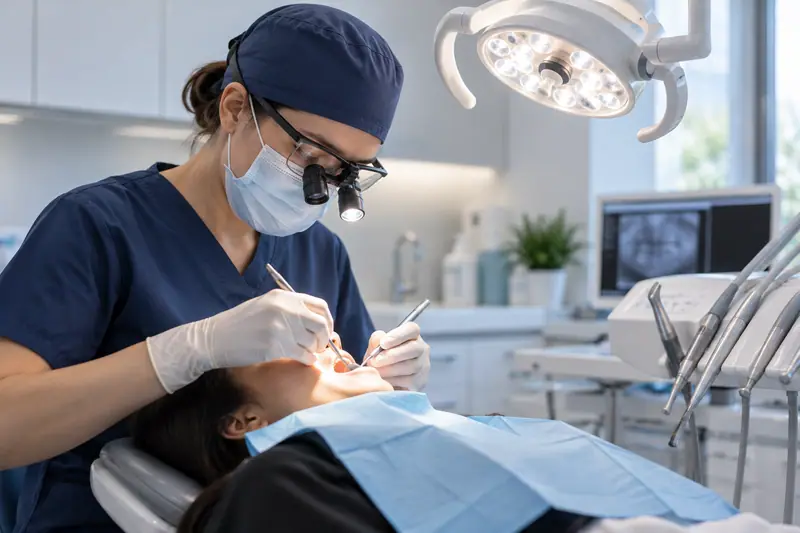
Smaller clinics need the same principles at smaller scale: even general light, a good examination light, and neutral CCT in consultation rooms. Dental clinics: see dental lights explained.
Where Keling fits
Keling Medical manufactures surgical lights and medical examination lights — the task-lighting layer for operating rooms, treatment rooms and clinics. Explore all products or the operating room lights guide, and contact us for a room-by-room proposal.
Frequently asked questions
What lighting is used in hospitals?
Hospitals combine general LED ceiling lighting, task lighting (surgical lights, examination lights, bed-head reading lights), night and orientation lighting, and emergency lighting. Clinical areas use sealed, cleanable fixtures with good colour rendering.
How many lux are needed in a hospital?
It depends on the room. Commonly cited general levels are around 100–200 lux in corridors and wards, about 300 lux for patient reading, about 500 lux in examination rooms, around 1,000 lux or more for general operating room lighting, and 40,000–160,000 lux from the surgical light at the field. Always use your national standard.
Why is LED lighting used in hospitals?
LED fixtures save energy, last long, switch instantly, dim smoothly, offer good colour rendering and can change colour temperature through the day — and sealed LED fixtures are easy to clean.
What colour temperature is best for hospitals?
Neutral to cool white (around 4,000–5,000 K) is common in clinical areas for alertness and colour judgement; warmer light (around 2,700–3,000 K) is often used in patient rooms in the evening to support rest.
What is a hospital bed light?
A bed-head light, usually built into the bed-head unit or wall, providing reading light for the patient, a dimmed night light and a brighter examination light for staff at the bedside.