Dental Lights Explained: Operatory Light, Ceiling Dental Light, Surgical Light or Loupe Light?
Dental lights compared: chair-mounted operatory lights, ceiling mounted dental lights, dental surgical lights for implants, loupe lights and dental office lighting — with lux, CCT and anti-curing advice.

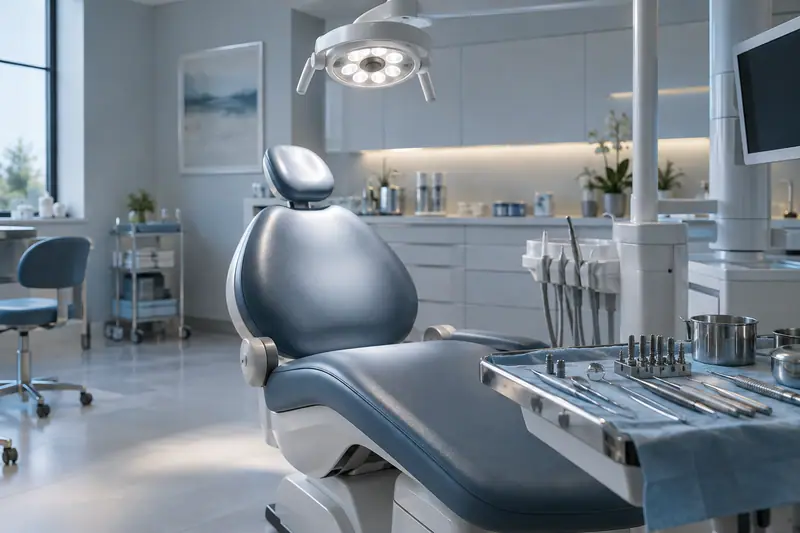
"Dental light" covers several very different products — from the small lamp on the dental chair to surgical-grade ceiling lights in implant suites, and the LED loupe light on the dentist's head. This guide sorts out which dental light does what, so clinics and distributors can specify the right one.
Summary: use the chair or ceiling operatory light for routine dentistry, add a dental surgical light for implant and oral surgery, and treat a loupe light as a personal supplement, not a replacement.
Types of dental light
| Type | Mounting | Typical use |
|---|---|---|
| Chair-mounted operatory light | Dental unit post | General dentistry, hygiene |
| Ceiling mounted dental light | Ceiling arm | Busy operatories, implant rooms, orthodontics |
| Dental surgical light | Ceiling or mobile | Implants, extractions, oral and maxillofacial surgery |
| Mobile dental / minor surgery light | Floor stand | Shared rooms, veterinary dentistry |
| Loupe light / dental headlight | On loupes | Magnified endodontics, restorative work |
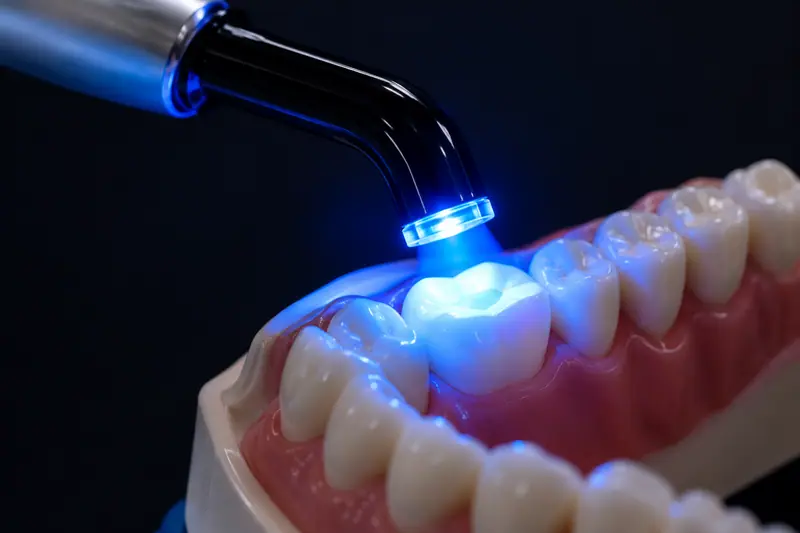
| Curing light | Handheld | Polymerising composite — see dental curing light guide |
| General dental office lighting | Ceiling panels | Room illumination |
Chair-mounted vs ceiling mounted dental lights
| Aspect | Chair-mounted | Ceiling mounted |
|---|---|---|
| Vibration | Moves with chair | Independent, stable |
| Floor/chair space | Uses chair post | Frees the chair area |
| Illuminance | Moderate | Can be surgical grade |
| Cost | Included with unit | Additional |
| Installation | None | Ceiling structure required — see installation guide |
What to look for in a dental operatory light
- Illuminance suited to the procedure; adjustable.
- Colour temperature around 4,500–5,500 K for shade matching; adjustable is a plus. See CCT explained.
- High CRI for accurate tooth and tissue colour.
- Anti-curing (composite) mode to prevent premature curing.
- Glare control — a sharp-edged field that does not shine in the patient's eyes.
- Touchless or sterilisable handles for infection control.
- Low heat — LED rather than halogen.
Dental surgical lights for implant and oral surgery
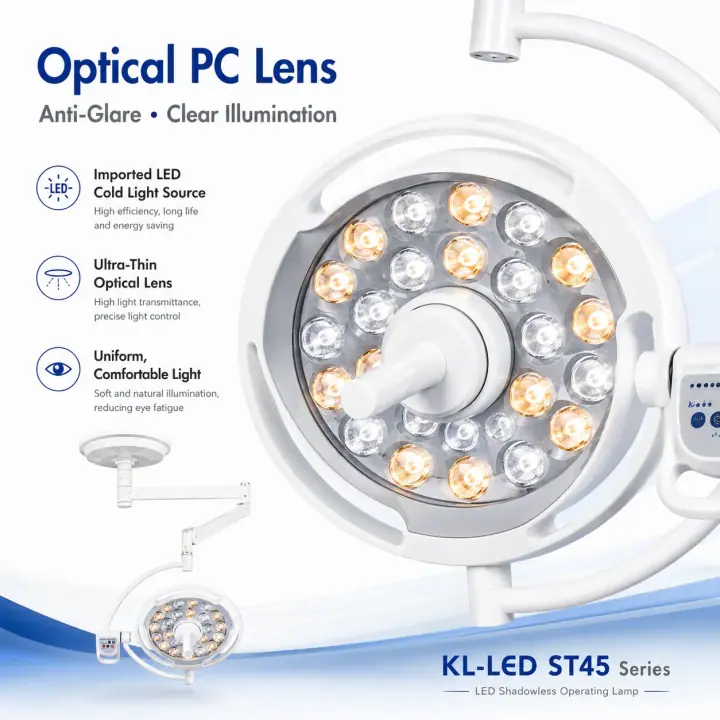
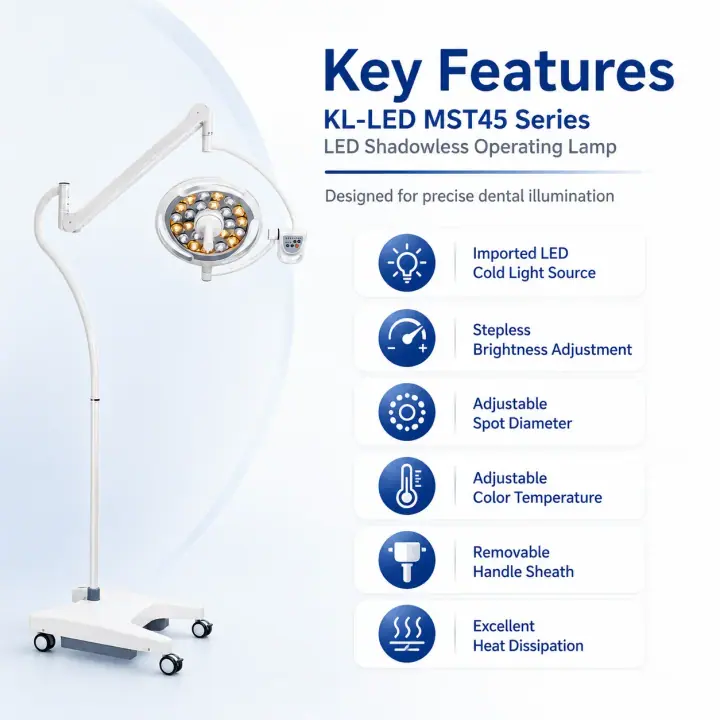
Implant placement, sinus lifts and surgical extractions are surgery. They benefit from surgical-grade light with a larger field, deeper illumination and better shadow control than a chair light provides. Keling designs two lamps for this:
| Model | Mounting | Illuminance at 1 m | Field | CCT | Special |
|---|---|---|---|---|---|
| KL-LED-ST45 | Ceiling, single or double dome | ≥ 80,000 lux | 10–20 cm | 3,000–6,700 K | One-key anti-curing, UV/blue filter |
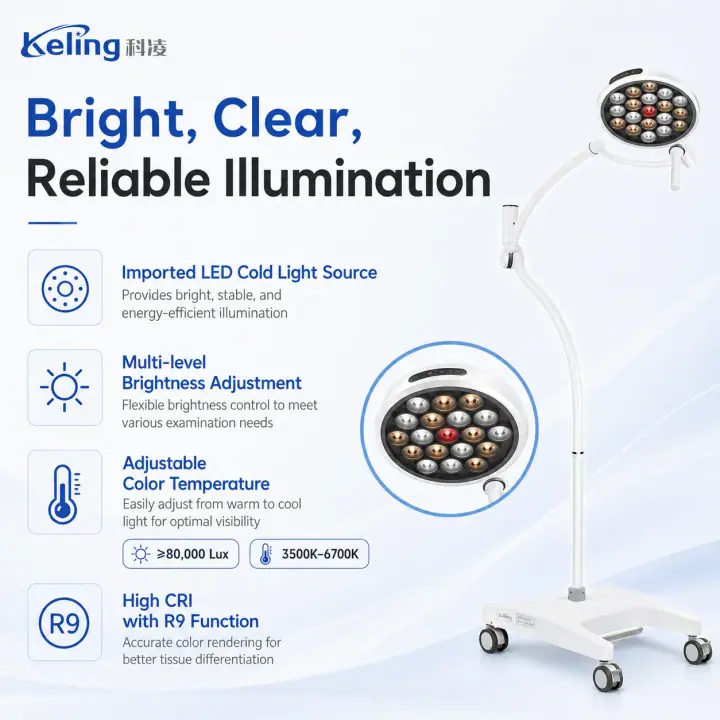
| KL-LED-MST45 | Mobile stand | ≥ 80,000 lux | 10–20 cm | 3,000–6,700 K | One-key anti-curing, ≥ 240° head rotation |
Full article: lighting for dental implant surgery.
Loupe lights and dental headlights
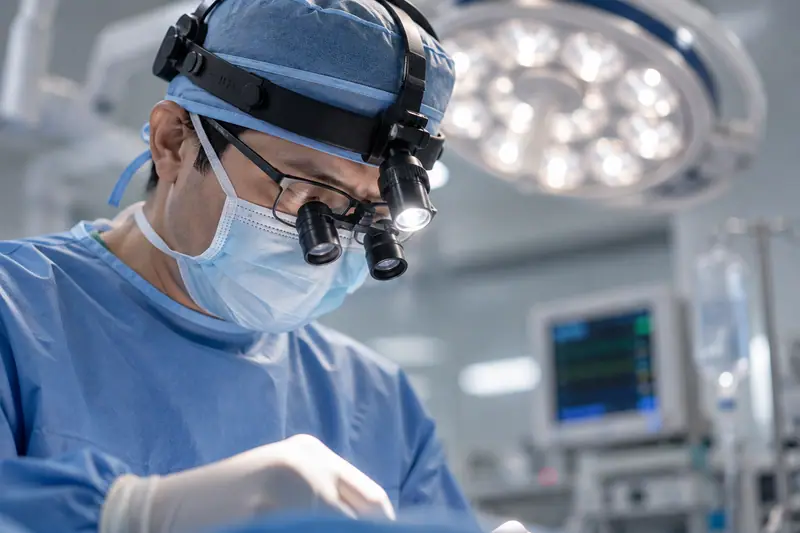
A loupe light puts light exactly along the dentist's line of sight — invaluable in endodontics and fine restorative work under magnification. It lights only where the wearer looks, though, so the assistant still relies on the operatory light. Comparison: surgical headlight vs surgical light.
Dental office lighting
Room lighting should be even and glare-free with good colour rendering, so that the contrast between the bright oral cavity and the room isn't tiring. Use neutral-to-cool CCT in operatories and warmer light in reception. More in the hospital lighting guide.
Wireless and LED dental lights
Most new dental lights are LED: cooler, longer-lasting and dimmable. "Wireless dental light" usually refers to cordless loupe lights; ceiling and chair lights remain mains-powered.
Equipping a dental clinic or a distribution range? Contact us for ST45 / MST45 specifications and pricing.
Frequently asked questions
What is a dental operatory light?
A dental operatory light is the task light that illuminates the patient's mouth during treatment. It is usually mounted on the dental chair, on the ceiling or on a mobile stand, and is designed to light the oral cavity without dazzling the patient.
Are ceiling mounted dental lights better than chair-mounted lights?
Ceiling mounted dental lights keep the light independent of chair movement and vibration, free space around the chair and can provide higher, surgical-grade illuminance. Chair-mounted lights are cheaper and come integrated with the dental unit.
How many lux does a dental light need?
ISO 9680 sets the requirements for dental operating lights, typically in the range of a few thousand to several tens of thousands of lux at the working distance. Dental implant and oral surgery benefit from surgical-grade lights; the Keling KL-LED-ST45 delivers at least 80,000 lux at 1 m.
Why do dental lights have an orange filter?
Blue light from ordinary white LEDs can start curing light-cured composite resin prematurely. An orange or anti-curing filter removes that blue component so composite stays workable. Keling's ST45 and MST45 have a one-key anti-curing function.
What is the best light for dental implant surgery?
A surgical-grade LED light with high illuminance, a field large enough for the whole arch, good colour rendering, low heat and an anti-curing mode — mounted on the ceiling or a stable mobile stand.